Sunday, May 29, 2011

48. Portland's Vintage Trolley, 5/29/11

On select Sundays from May through the Sunday before Christmas Day, old-style trolleys run along the MAX tracks on the Portland Transit Mall.

Leaving NW 5th & Glisan: Union Station was the brainchild of rail baron Henry Villard who suffered financial setbacks and lost ownership of the project before it was completed in 1896.

Proceeding southbound on NW 5th Ave: We now traveled along the edge of Portland's Chinatown. This area was a center for railroading, lumbering, and both river and ocean-going ships. It was also known for bawdy houses, saloons, and gambling parlors.

Southbound on SW 5th at Stark: The old First National Bank Building was the first national bank west of the Rocky Mountains. It as built in 1916 in a style reminiscent of the Lincoln Memorial in Washington D.C. and many think it is the finest example of Roman architecture in the West.

Southbound on SW 5th leaving Oak St: Here stands Pioneer Courthouse, which offered a splendid view of the countryside from its cupola when built on the edge of town in 1869.

Southbound on SW 5th at Madison: The Renaissance Revival style Portland City Hall was completed in 1895. This early steel-framed structure was one of the first buildings in the Northwest to feature electric lights and central heat. It was considered to be fireproof.

Southbound on SW 5th approaching PSU: Fifth Avenue has a long railway history. Cablecars ran here for 15 years, starting in 1890. They were replaced by the very trolleys that we rode in were patterned after; the Council Crest cars. Portland cablecars were ordered from the same firm that built San Francisco's historic cars and look just like them.

Northbound on SW 6th at Mill: Now a well-regarded urban university, Portland State began as a non-accredited Junior College. It can trace its roots to an extension center wiped out in the Vanport Flood of 1948.

Northbound on SW 6th at Jefferson: The University Club is a rare example of Jacobethan style. It was built in 1919 for a socially prominent club founded in 1898. Next door is the city's oldest continuously fashionable apartment building, and one of the most ornate, the Ambassador Apartments built in 1922.

Leaving Pioneer Courthouse: The cream colored tiles on the buildings across the street identify them as part of the Terra Cotta Historical Area. The "last of the handmade buildings" include Macy's, Portland's oldest and largest department store. It was built in 1909 as Meier & Frank.

Northbound on SW 6th at Stark: Well-known architect A.E. Doyle designed two bank buildings along the city's financial blocks: The U. S. National Bank was built in 1916 and the old Bank of California next door in 1924. The Bank of California is considered Portland's most impressive Italian Renaissance building.

Northbound on NW 6th after Burnside: Now back in Chinatown…Portland's Chinatown was once bigger than any other on the West Coast outside of San Francisco. It sported a Erickson's Saloon, which had the 'longest bar in the world.' It was also infamous for shanghaiing of sailors. The Classical Chinese Garden is now in this district.

Northbound on NW 6th at Glisan: The Steel Bridge served the Northwest's first electric trolley. The Albina Line began running across this bridge to Albina in 1889. The Steel Bridge also holds the distinction of being the world's only double decked, telescoping, lift span.

It was great to see even more of Portland's history. Thanks Diana for sharing in it with me.

Sunday, May 22, 2011

47. Mount St. Helens, 5/22/11

The picture above is where you would see the mountain if the weather would have cooperated. I am glad to have gone, but I was disappointed that the view was not there. Any pictures I got of the mountain are pictures of pictures within the observatory.


The Johnston Ridge Observatory sits on a bluff just 5-1/2 miles from the crater at an elevation of 4,314 feet and offers grand views of Mount St. Helens and much of the 1980 blast zone. This visitor center is the closest you can get to the mountain by car when driving in from the west and is located 53 miles east of the town of Castle Rock at the end of State Route 504. The center includes: exhibits with a geological focus, a 16-minute theater program, ranger-led programs, and a bookstore.

A magnitude 4.2 earthquake 31 years ago marked the reawakening of Mount St. Helens after 123 years of inactivity and set the stage for the most destructive eruption in U.S. history. The catastrophic eruption of May 18, 1980, claimed 57 lives and caused an estimated $1 billion damage. It was a very visible reminder that volcanoes can reawaken quickly and with little warning, and that Cascade Range volcanic activity was far from being a thing of the past.

The two months between the first earthquakes and the large May eruption was one of great uncertainty and activity as scientists and public officials strove to understand the dramatic volcanic events and forecast future activity. Seven days after the initial earthquake, March 27, 1980, a loud boom was widely heard by many residents of Southwest Washington and aerial observers noted a dark dense column of volcanic ash rising through the clouds, eventually reaching a height of 6,000 feet above the volcano. In the coming months, dozens more explosions punched and expanded fresh craters into the volcano’s summit. Hundreds of earthquakes of magnitude 4 or greater rocked the volcano and the north flank of Mount St. Helens moved outwards by five feet per day.

While the United States and its territories contain 169 volcanoes considered capable of erupting, prior to the Mount St. Helens eruption the only U.S. Geological Survey volcano observatory was in Hawaii. The May 1980 eruption, however, would be the catalyst for change, as increased money would be allocated for volcano monitoring and Cascades Volcano Observatory would be founded. Since that time, additional volcanic events and better recognition of areas of interest have resulted in the growth of USGS’ monitoring program. Today, the USGS has five volcano observatories: Cascades Volcano Observatory in Washington; the Hawaiian Volcano Observatory; the Long Valley Observatory in California; the Yellowstone Observatory; and the Alaska Volcano Observatory.

During the 31 years since the catastrophic volcanic eruption of May 18, 1980, Mount St. Helens continues to challenge and inspire scientists to understand the causes and nature of volcanic eruptions.

Thanks Kat for going and showing me a huge part of the Northwest's history.

Saturday, May 21, 2011

46. Sisters' Day, 5/21/11

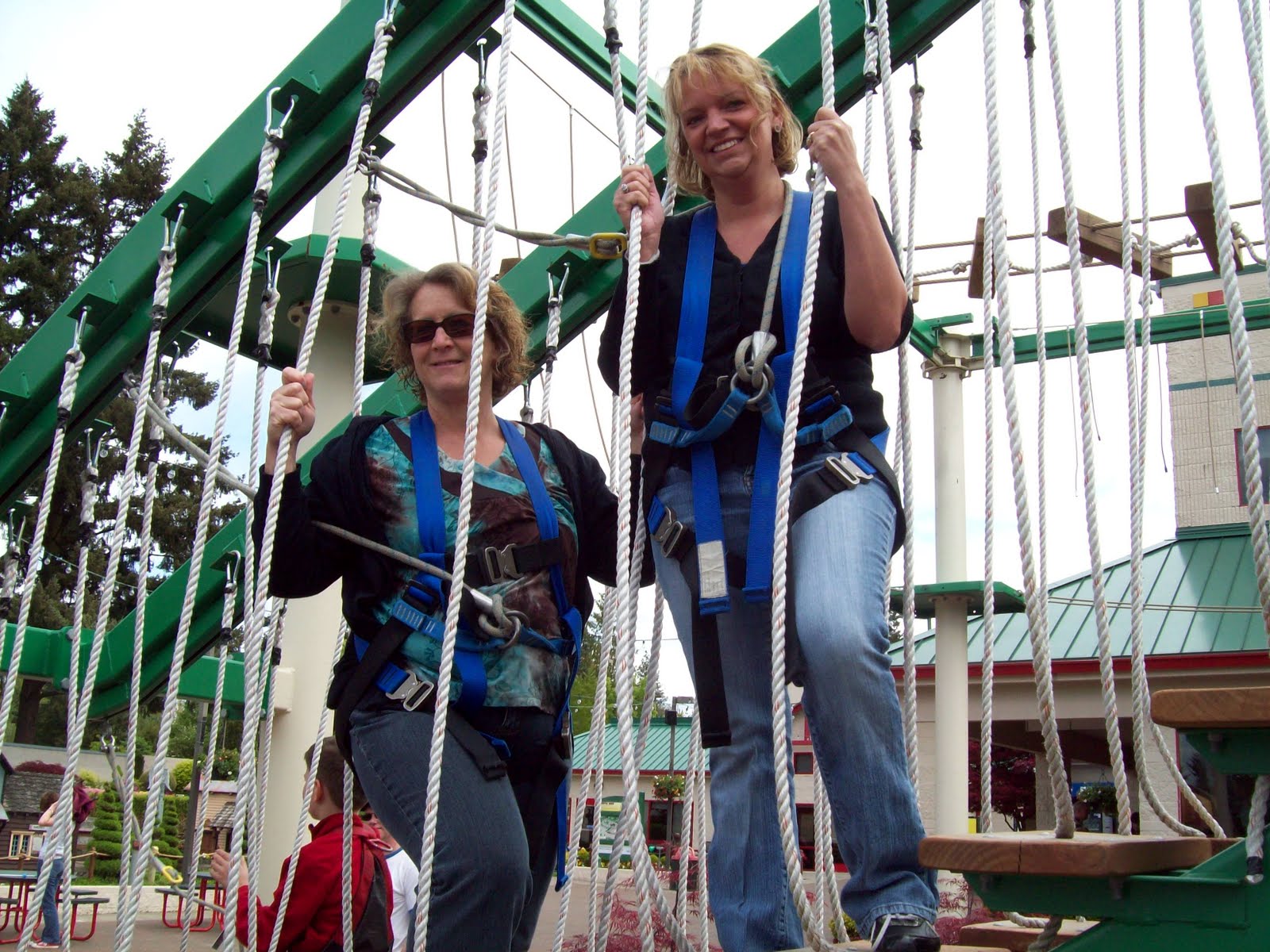
I do not know who said it, but it is one of the truest statements I have ever heard. “You can pick your friends, but you cannot pick your family.” With most of our friends, there is a point in the relationship where one or both people decide that they would like to have a deeper connection with the other but with family, we don’t get that option. From the very beginning, we are given brothers and sisters and parents, with no say in the matter at all. Family knows us better than we know ourselves. They know when we are faking it, when we are upset, or when we are trying to keep a secret. They have lived with us for most of the growing part of our lives. It was a special day…getting to spend time with my sister, just she and I. We were born sisters, AND I would choose her as my friend. For so many years, anytime we have gotten together it has been with our children or about our parents, but we have never done anything just the two of us, that is, until today. Thanks Michelle, I had a great time today.

Family Fun Centers (FFC), also known as Bullwinkles, were started over 40 years ago in a small rural town by twin brothers Jim and John Huish in college. Through hard work and dedication, FFC has developed into a growing and successful business. Great pride is taken by FFC to create an atmosphere that is both family oriented and processional. FFCs are located throughout the Northwest with locations in Wilsonville, Oregon and Tukwila, Washington. The FFC in Wilsonville opened in December of 1994, while the one in Tukwila opened in 1999.

The fun never ends at the Wilsonville Family Fun Center! (Well, it almost never ends.) Come early and stay late! They are open all year round – rain or shine – and there are plenty of great attractions for kids – young and old. It is best described as a Chuck E Cheese for adults and seriously, the only thing missing is a bowling alley and the transformation would essentially be complete.

The six-acre amusement park offers year-round fun for the whole family. Outside, the park offers miniature golf, go-karts, bumper boats, sling-shot, a climbing wall, and batting cages. Inside, there are two stories with over 100 arcade games, Max Flight Cyber Coaster, Lazer Xtreme, Kidopolis, and Bullwinkle’s Restaurant.

Today, my inner child was extremely happy.

Saturday, May 14, 2011

45. Bluegrass From the Forest, 5/14/11

The 7th annual Bluegrass From the Forest presents The Boxcars, Bluestone County, Northern Departure, The Blackberry Bushes, Sugar Pine, and host band Runaway Train. We were able to enjoy some of the best in bluegrass music in a great indoor theater atmosphere. There was camping onsite, band contests, a band scramble, a banjo contest, mandolin tasting, a youth program, vendors, and much more. Jamming space was available indoors, in the camping areas, and throughout the school campus grounds in addition to several special events.

The first group we heard was Sugar Pine – a group that jumps into the fray with both feet, mostly from the Portland area. Then we heard Bluestone County – If you have spent anytime at all around the NW bluegrass scene, you have probably run into one or more of these musicians as this group comes from the Mid-Willamette Valley. After them, we got to listen to The Blackberry Bushes – A high energy, soulful, Americana quartet. This group has remained true to their Ozark, Appalachian, and Mississippi River roots, and added just a twist of West Coast indie-rock.

Of course, what festival would be worth its weight in gold without some good food. This, of course, was no exception. Lynne, Dawn, and I all had the same thing, Supreme Hungarian Elephant Ears, yummo!

The headliner group – The Boxcars – They are one of the hottest bands on the bluegrass scene. The Boxcars are a quintet composed of serious players with big reputations. I sat in awe as I listened to each groups’ distinct sound, and while bluegrass may not be my first choice of music, I totally have a new appreciation for the sound, so much so I even bought a CD from The Boxcars. Now, off to listen to my new CD.

Saturday, April 30, 2011

44. OMSI, 4/30/11

My kids do not believe that I have never been to OMSI (Oregon Museum of Science and Industry) since apparently everybody has been there, but if I have been there I must have Alzheimer’s as the place is pretty unforgettable, and I am pretty sure I would remember this place.

OMSI puts the wow in science for the kid in each of us. You too can explore a world of hands-on fun! With more than 200 interactive exhibits for all ages, five unique halls, eight hands-on science labs, an OMNIMAX Theater, an authentic submarine, and a state-of-the-art art planetarium, there is something for everyone.

I can see why kids would love this place…there is a lot to do that would hold their attention, a lot of hands-on activities for them to engage in. Two of the exhibits that were of most interest to me was Ancient Egypt and Beginning the Journey.

Lost Egypt: Ancient Secrets, Modern Science illuminates this remarkable civilization as never before, by focusing on an area that is often overlooked in comparison with the grandeur of the pyramids: The lives of the ordinary people who built them.

We got to meet “Annie” (short for “anonymous”), an unidentified girl whose body was pulled from the Nile River and mummified. Scientists do not know the cause of her death, and it is still a mystery why an unknown girl would get a mummified burial.

The other exhibit that I found interesting was “Beginning the Journey.” OMSI has one of the largest displays of human fetuses open to the public. I was able to examine the different stages of human fetal development during all nine months of pregnancy. It was amazing to see and read about fetuses and how much they can change and grow even in the short time of a week or two. Maybe this exhibit held a special interest to me because my daughter-in-law and son are having a baby.

There would be more pictures, except they do not allow photography. Thanks Keri for opening my eyes to a whole new world…it was a great day!

Saturday, April 23, 2011

43. Helicopter Ride, 4/22/11

Feel the Heat! Doors Off! Wind in your face! 2200 degrees molten, red hot lava!

The unforgettable, unique, doors-off Volcano/Waterfalls experience provided us the chance to feel the heat of the world’s most active volcano! We felt the heat radiate from the lava as we experienced the volcanic activity firsthand and the sensation of flight in an open cabin…with no doors in the way. This was an adventure of a lifetime.

We flew in the world famous Hughes 500 (the same model helicopter Magnum P.I. used)! This amazing helicopter seats four passengers and everybody (minus the person who sits by the pilot) gets a window! Departing Hilo International Airport, we flew over the beautiful and lush rain forests of the Hilo area. We saw the world famous Mauna Loa Macadamia Nut Farm, beautiful vistas of Mauna Loa (Hawaii's largest mountain), the current eruption of Kilauea, and beautiful Rainbow Falls.


The scenery was unique. The Hawaiian Islands are the most isolated islands on Earth and there is no better way to experience their splendor than by Helicopter.

All of the professional pilots have a deep love of the islands and a fundamental knowledge about the area's volcanoes and natural landscape. We were able to view the flow of lava in its natural environment and receive a personalized narration of the science and magic behind Hawaii's constant volcanic activity. Of course, no Hawaiian helicopter tour would be complete without an additional focus on the lush rain forests, cascading waterfalls, and incredible shorelines of this Paradise of the Pacific.

Located at the foot of two volcanoes and overlooking the spectacular Hilo Bay, Hilo is the ideal destination for those who wish to catch a glimpse of the rough beauty of Hawaii's coastlines and fiery mountains. The city is known to locals as the "biggest small town" on the island, giving it a great combination of small-town aloha spirit and access to the kinds of shops and restaurants that make a vacation memorable.

Tuesday, April 19, 2011

42. Snuba, 4/14/11

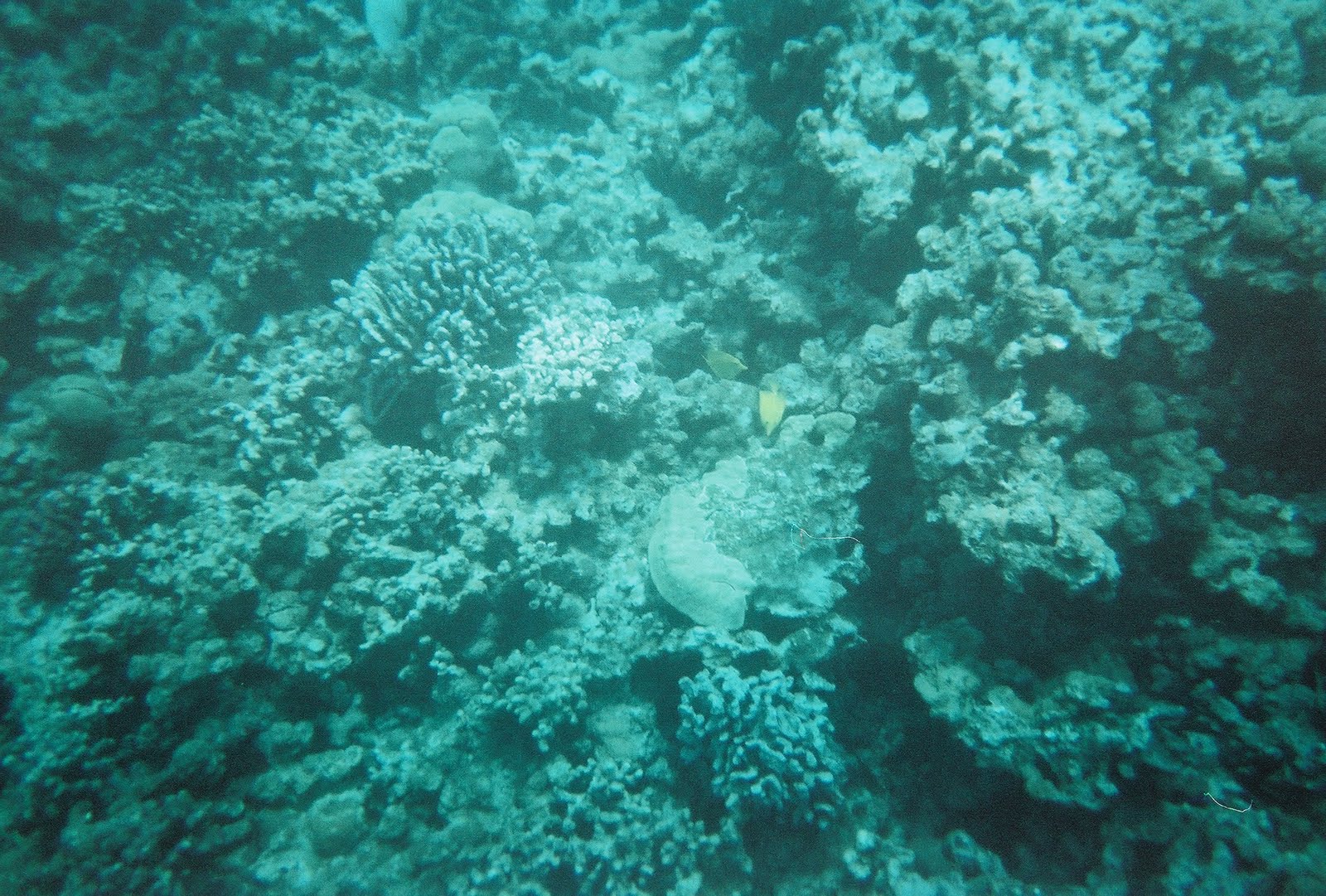
Katrena and I went snuba’n. Many of you might ask, what is snuba? Snuba, invented in 1988, is a dive experience that combines the best of both snuba and snorkeling. It allows participants to go deeper than snorkeling using a shallow water dive system that makes it possible to dive as deep as 25 feet below the surface for up to 30 minutes without wearing heavy air tanks.

Snuba was created for those who enjoy the ocean and would like to experience the wonders of breathing underwater. Snuba is safer and easier than scuba and does not require certification.

A professional guide is with you the whole time. You progress at your pace, letting go of the raft and diving down when you choose to, and diving at the depth you prefer. You wear a lightweight harness that tethers you to the snuba raft on the surface by way of a 25' hose. The raft carries your tank on the surface and follows your every move. You breathe through a regulator, wearing a small weight belt, mask, and fins. Minimal equipment for maximum fun! Beginners are instructed in the proper use of the snuba gear and in a very short time you are enjoying the beauty and serenity of the underwater world. If you have ever wondered what scuba diving is like, there is no safer and easier way to find out than snuba. Many people have commented on the fact that snuba is easier than snorkeling. While you are snuba’n, you can expect to see coral reef here that is frequented by green sea turtles, octopus, and a great variety of tropical fish and marine life.

Let me tell you though, it is a little harder to get used to than one might think. We are always taught to breathe through our noses and not through our mouths. The first rule of snuba is to breathe through your mouth using your regulator. Our brains fight the urge to breathe underwater because every fiber of our being tells us to hold our breath underwater, but our guide told us to make sure and NOT hold our breath. Once you get used to the breathing part though, the rest is easy and oh so much fun.

I only freaked out and panicked once. After much practicing on the surface of the water, I finally was ready to “dive.” The instructor began to dive, but as hard as I might try, I could not dive. The instructor finally came back and put another weight on my belt and that helped, but once again I came to a point that I could not seem to descend as deep as I would have liked. Finally, I started to descend down, BUT all of a sudden I just kept descending, even when I did not want to. Apparently, I was vertical (I learned one is supposed to be horizontal when diving and not vertical), and I starting sinking. Before I knew it, I was touching the bottom of the ocean, 25 feet down. This is when I freaked out and panicked. I saw my instructor but he was looking forward, not backward at me. I began to swim in circles thinking I was about to die when I remembered what the instructor told us if we needed to go to the surface – grab your 25 feet of hose that was tethering you to the raft above and SLOWLY pull yourself to the top – so that is what I did. After I got back to the top, caught my breath and regrouped, I was able to go back down. The pictures I took surely do not do justice to what I saw below the surface, the brightly colored fish, the coral, and the marine life. Sadly, about the time I finally got it all figured out, we had to head back.

Some of you might ask about Katrena’s experience…well, considering she does not like water in her face and she has never even been snorkeling, she did very well. She was able to keep her face in the water and was breathing through her regulator. Who knows, maybe next time, she will even let go of the raft.

Every January, it seems like everyone is buzzing about New Year’s resolutions. We hear about ambitious goals and “new year, new me” aspira...